
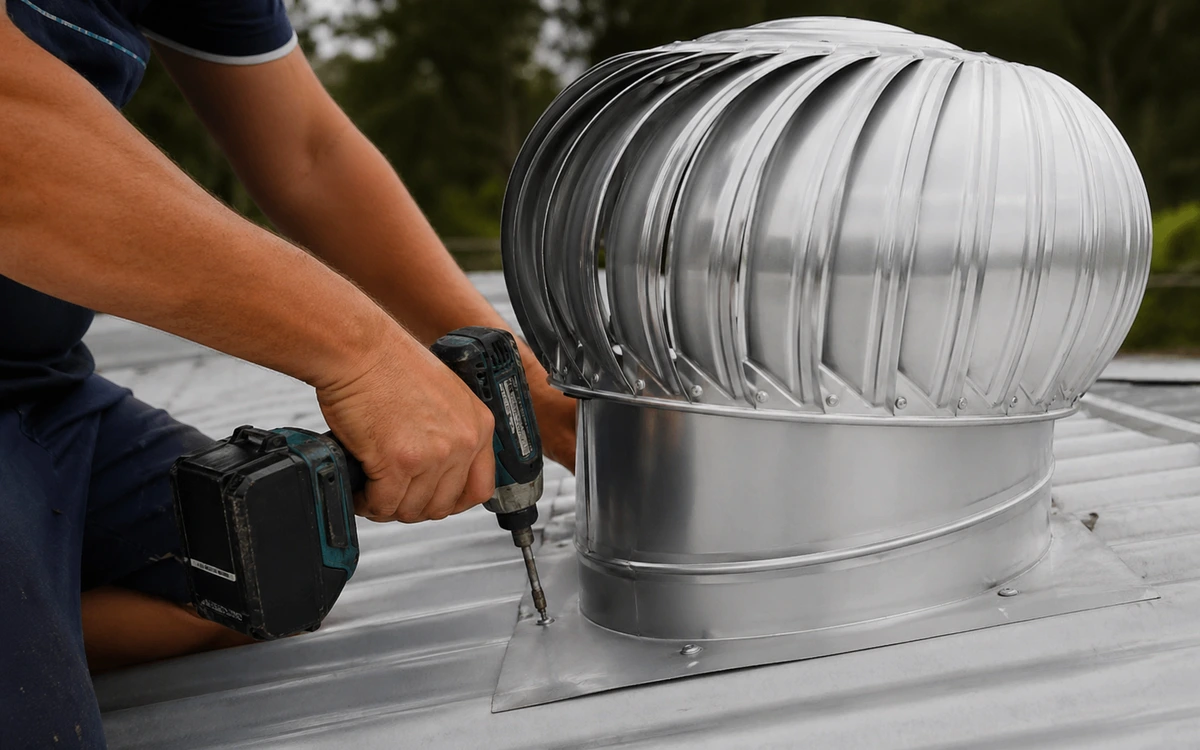
We provide professional roof turbine installation services in San Antonio, TX for attics with poor ventilation, trapped heat, and moisture buildup that can lead to mold, higher energy costs, and roof deterioration. Installation creates continuous airflow, expels hot and humid air, and regulates attic temperature to reduce strain on roofing materials and improve overall ventilation. Call us or request a quote today.
What Does a Roof Turbine Vent Do and How Does It Improve Attic Ventilation?
A roof turbine vent uses wind power to spin a fan that pulls hot, stale air out of the attic. This continuous airflow reduces heat buildup and moisture that can damage insulation and roofing materials.
How Does South Texas Heat Affect Roof Turbine Installation in San Antonio?
San Antonio’s long, hot seasons can cause significant heat to collect in attic spaces. Homes near Alamo Heights and neighborhoods along the San Antonio River often deal with rising indoor temperatures. Installing roof turbines helps vent hot air and improve cooling efficiency.
Why Is My Attic Still Hot Even After Installing a Roof Turbine?
A roof turbine won’t cool an attic properly if there isn’t enough intake ventilation like soffit vents. Without balanced airflow, the turbine has nothing to pull in, so heat stays trapped.
Roof Turbine Vs Ridge Vent: Which Is Better for Ventilation Performance?
Roof turbines move air more aggressively because they actively spin and exhaust hot air faster than passive ridge vents. Ridge vents rely on natural convection, which works well but is slower in low-wind or low-temperature-difference conditions.
Can Roof Turbines Leak or Cause Roof Damage Over Time?
Roof turbines can leak if the flashing or seal around the base fails or was installed incorrectly. Proper installation with sealed flashing and regular inspection prevents water intrusion and roof deck damage.
How Long Do Roof Turbine Vents Typically Last Before Needing Replacement?
Most roof turbines last 10 to 20 years depending on material quality and weather exposure. Bearings and moving parts usually wear out first, causing noise or reduced spinning efficiency.
When Should You Replace or Upgrade an Existing Roof Turbine Vent?
You should replace a roof turbine when it stops spinning freely, makes grinding noise, or shows rust and corrosion. Upgrading to newer aluminum or stainless models improves durability and airflow performance.
How Much Does Roof Turbine Installation Cost in San Antonio, TX?
Roof turbine installation costs in San Antonio, TX typically range between $565 and $2,185, with typical pricing depending on the number of turbine vents being installed, roof type and pitch, and accessibility of the installation area. Pricing can also vary based on existing roof condition, whether new openings must be cut or existing vents replaced, flashing and sealing requirements, and the need for attic ventilation balancing or minor electrical work for hybrid systems.